Why applying to more jobs isn't getting you more interviews

If your job search has turned into sending the same CV to fifty roles and hearing nothing back, you're not alone, and it isn't because you aren't good enough. It's because volume is the wrong strategy.
Why mass applying backfires
Generic CVs don't match anything well. Every advert asks for something slightly different. A CV written for everything ends up proving nothing in particular, so it is easy to pass over.
Recruiters are overwhelmed. In Robert Walters research, 70% of hiring managers had seen more applications, 57% said the volume had caused delays, and 62% said lack of relevant experience was the main reason for rejection (Onrec, April 2025). The applications that stand out are the ones that clearly speak to the role.
It drains your time and confidence. Nearly 38% of job seekers needed 100 or more applications to land their last role, and 44% had more than 50 applications go completely unanswered (JobLeads, 8,500 responses, October 2026). Hours spent on roles that were never right for you are hours you could have spent preparing properly for the ones that were.
You lose track. Applications spread across job sites, recruiter emails and company portals. It's easy to miss a reply, forget a follow-up or turn up to an interview underprepared. See this guide on how to keep track of job applications.
What works instead
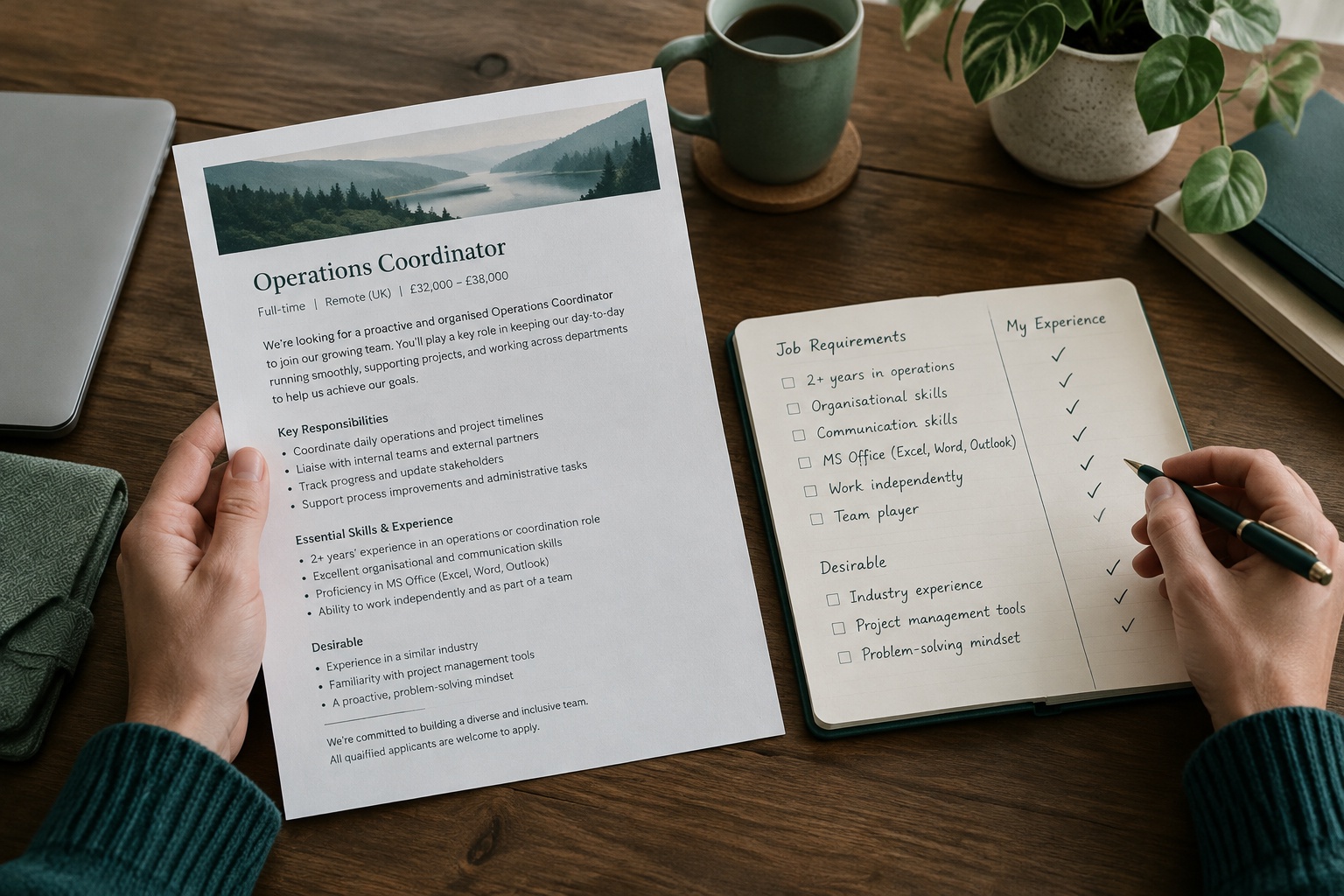
- Be honest about fit. Before you apply, compare the essential requirements with your actual experience. If you meet most of them and can explain the rest, apply. If not, move on without guilt.
- Check your must-haves early. Salary, location, office days and level. A role that fails one of these isn't worth an application, however good the job title sounds.
- Tailor every CV. Use the advert's own language where it truthfully describes your experience, and lead with the evidence that matters most for this role.
- Close the gaps you can. Often a "gap" is something you have done but never written down. Look back at your work and add the evidence.
- Put the saved time into preparation. Research the company, prepare your examples and practise your answers out loud.
Quick questions
Fewer applications. Better ones.
Build your career profile with Katie, get an honest fit check, and a CV written from your real experience.