How to answer "Tell me about a time when..." questions using your own evidence

"Tell me about a time when you led a team through change." "Give me an example of a difficult stakeholder." These competency questions come up in almost every interview, and they're where many good candidates go blank. Not because they lack experience, but because they can't recall the right example in the moment.
Why these questions are hard
Interviewers ask for past examples because what you have done is the best guide to what you will do. But most of us have years of work we've never written down. Under pressure, we reach for whatever comes to mind first, which is often not our best story.
Preparation is also getting more competitive. Half of UK job seekers now use AI to prepare for interviews (Greenhouse Workforce and Hiring Report, July 2025). Rehearsed generic answers won't stand out; your own specific stories will.
Step 1: Build your evidence bank
Go through each role you've had and note the moments that mattered:
- problems you solved
- changes you led or helped deliver
- times you influenced someone senior
- projects that went wrong, and what you did about it
- people you coached or developed
- results you can measure: time saved, money saved, growth, quality, risk reduced
Don't worry about polish yet. The aim is to get the raw material out of your head.

Step 2: Group your examples by skill
Most competency questions fall into familiar themes: leadership, stakeholder management, problem solving, delivery, change, commercial awareness, resilience and teamwork. Aim for two or three strong examples for each theme, so you're never stuck using the same story twice.
Step 3: Structure each example with STAR
- Situation: the context, in one or two sentences
- Task: what you were responsible for
- Action: what you did. This should be the longest part. Say "I", not "we"
- Result: what changed, ideally with a number, and what you learned
Keep each answer to about two minutes. If the interviewer wants more detail, they'll ask.
Step 4: Match your examples to the job
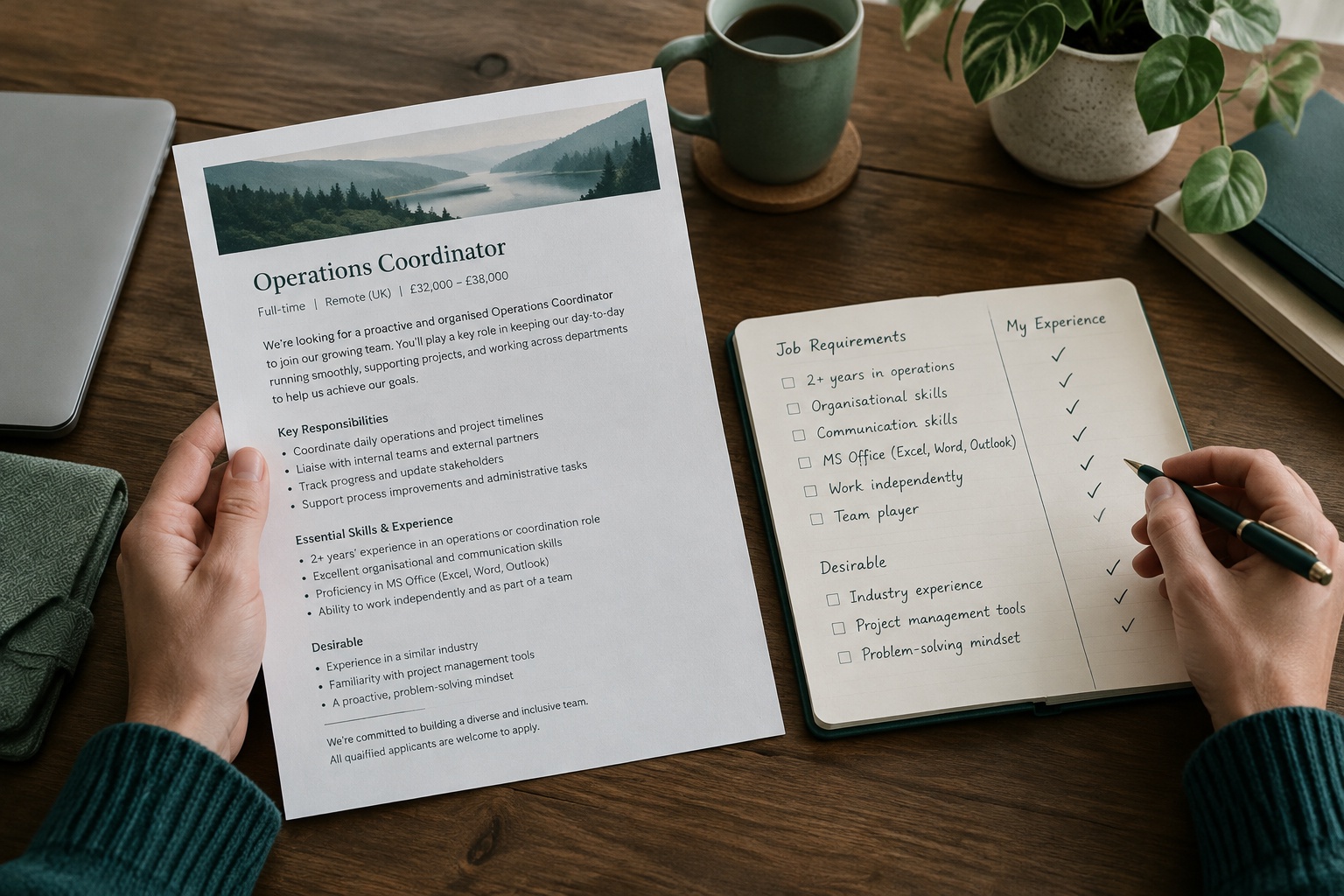
Read the job description and pick out the skills it emphasises. Those are the questions you're most likely to be asked. Choose your strongest example for each one and practise saying it out loud.
Common mistakes to avoid
- Spending too long on the situation and too little on what you did
- Describing what the team did, so the interviewer can't see your part
- No result, or a vague one
- Choosing an example that doesn't really answer the question
Quick questions
Fewer applications. Better ones.
Build your career profile with Katie, get an honest fit check, and a CV written from your real experience.