How to tell if a job is a real fit before you apply
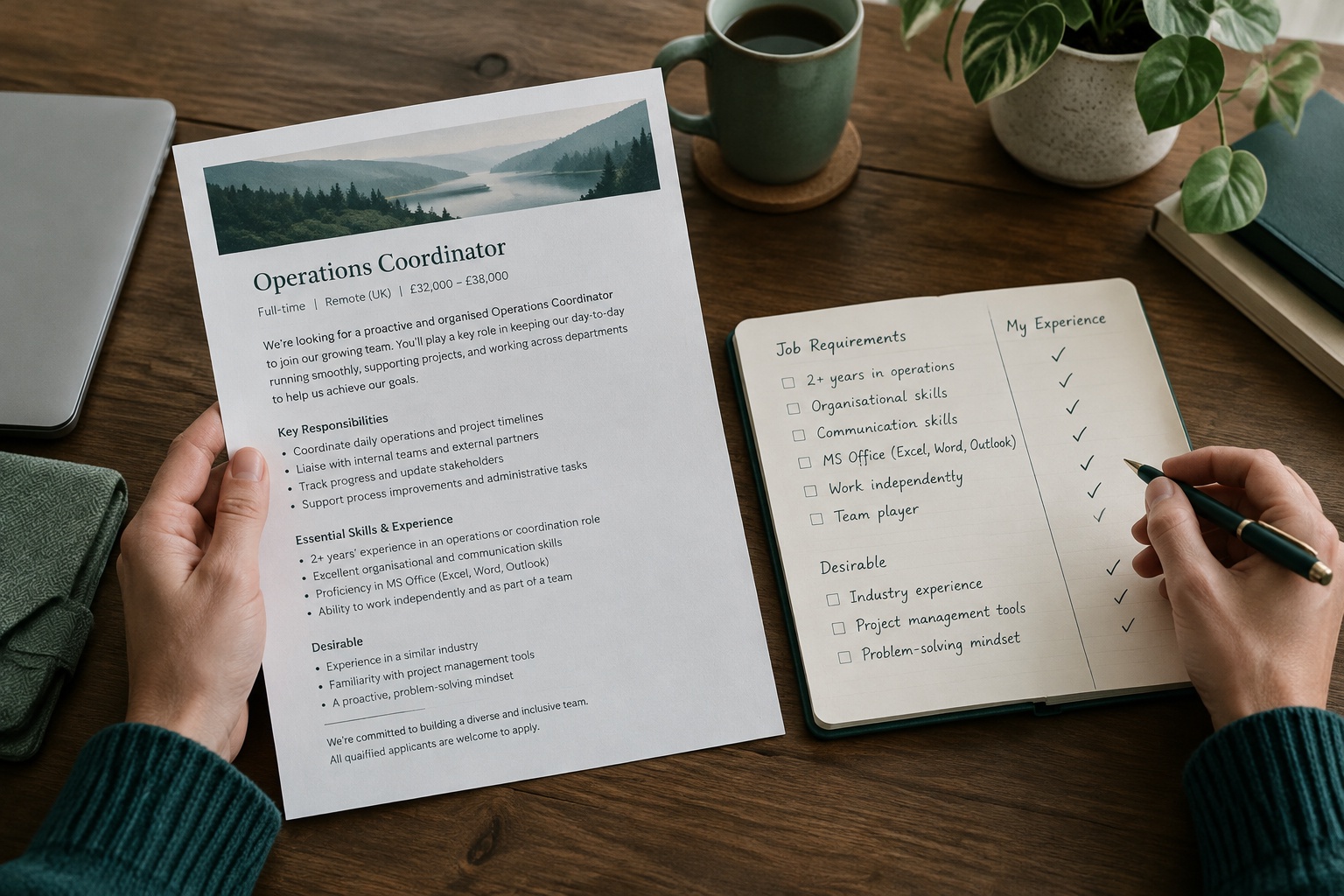
It's easy to fall for a job title. But a role that looks perfect at first glance can turn out to be the wrong level, the wrong location or a remit you've never done. A few minutes of honest checking before you apply can save you hours.
Step 1: Check your must-haves first
Before reading the detail, check the things that would rule a role out for you, whatever else it offers:
- salary or day rate
- location and number of office days
- contract type: permanent, fixed term or contract
- level and seniority
If the salary isn't stated, look at the title, the size of the organisation and who the role reports to. These usually give a good indication of the pay range.
Step 2: Separate essential from desirable
Most adverts list both. Essential requirements are the ones employers screen on. Desirable ones are a bonus. Don't rule yourself out because you're missing a desirable skill.

Step 3: Match your evidence to each essential requirement
For each essential requirement, ask: can I give a real example of doing this? Rate each one:
- Met: you have clear evidence
- Partly met: you've done something similar or related
- Gap: you haven't done it
Be fair to yourself. Your CV is a summary, so you may have done more than it shows. Transferable experience counts. Ten years in a regulated industry, for example, is relevant to another regulated industry, even if the sector is different.
Step 4: Look at the scope
Compare the role's scope with what you've done: the size of the team, the budget, who you'd report to and how much of the organisation you'd cover. A step up is fine if it's credible. A leap with no stepping stone is harder to land.
Step 5: Decide
- Strong fit: most essentials met, must-haves passed. Apply with a tailored CV.
- Worth considering: a few gaps you can explain. Apply if you can show how your experience covers them.
- Not a fit: must-haves failed or several essential gaps. Move on and put your energy elsewhere.
One more check: is the job still open?
Job boards and aggregator sites often keep adverts up long after a role has closed. In one UK survey, 24% of workers believed they had applied for a ghost job (Employment Hero and OnePoll, January 2026). Before you spend time on an application, open the employer's own careers page and check the advert is still live with a working apply button. See this guide for more on spotting ghost jobs.
Quick questions
Fewer applications. Better ones.
Build your career profile with Katie, get an honest fit check, and a CV written from your real experience.