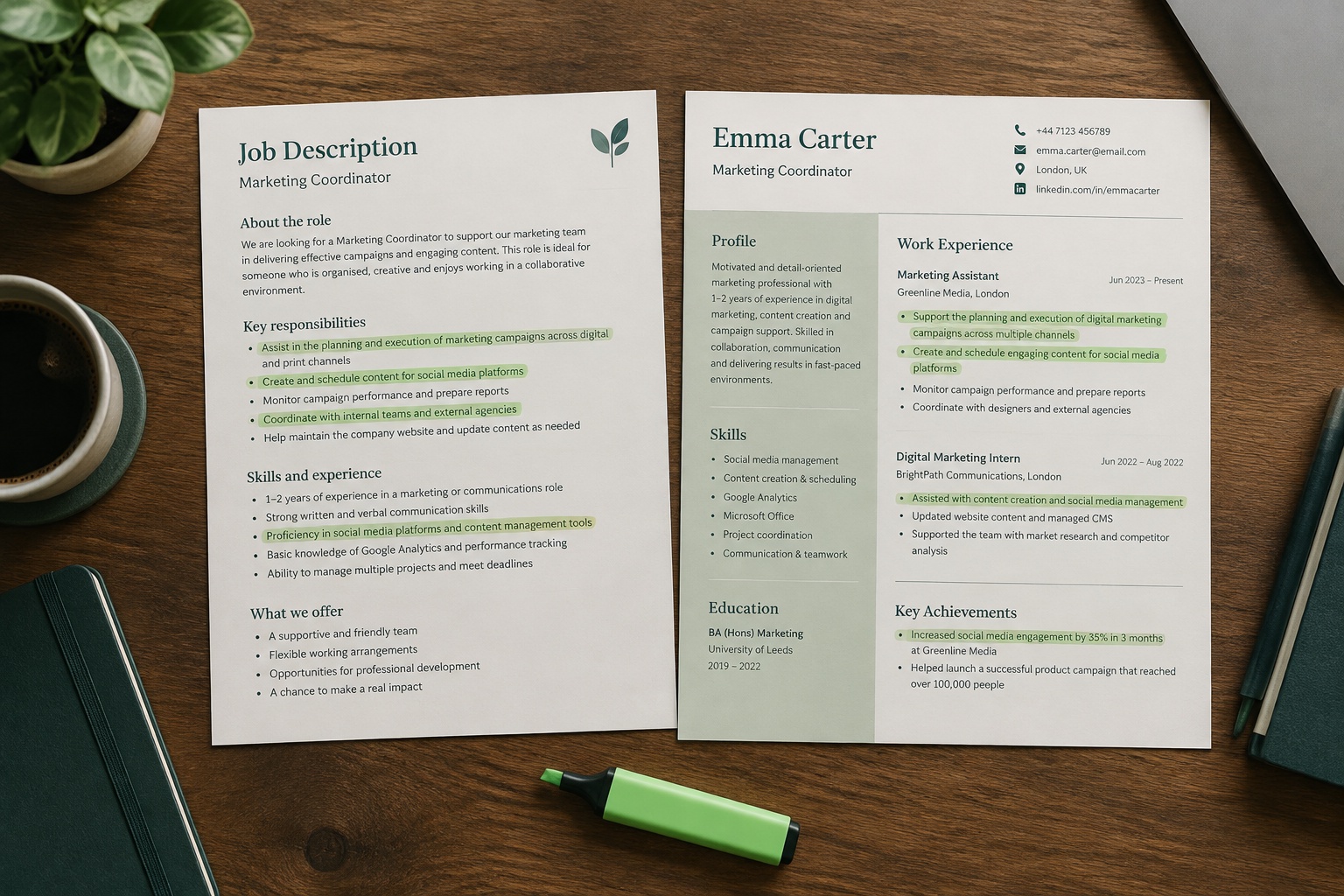
Should you use AI to write your CV? What UK employers think

AI can save you hours on your CV. It can also produce something bland, generic and obviously machine-written. The difference is how you use it.
How many people use AI for their CV?
A lot. In a 2026 survey of 739 UK candidates, 47% said they use AI for job applications, and 51% had used AI tools to improve or tailor their CV (Omni RMS via Staffing Industry Analysts, April 2026).
Can employers tell if your CV was written by AI?
Often, yes, when it's generic. In research by recruiter Robert Walters, 73% of hiring managers said they could spot AI-written CVs or cover letters, and 35% said AI use would hurt their opinion of a candidate (Onrec, April 2025).
What gives it away is rarely the AI itself. It's the signs of a CV with nothing real behind it:
- vague claims like "results-driven professional with a proven track record"
- the same buzzwords as every other application
- achievements with no numbers, names or context
- a tone that doesn't match how you speak in the interview

What AI is good at
- Tailoring: reordering and rewording your experience to match a specific job
- Keywords: making sure the advert's important terms appear, in context
- Tightening: turning long paragraphs into sharp bullet points
- Spotting gaps: comparing your CV against the advert and showing what's missing
- Consistency: keeping dates, formatting and tense consistent
What you should never let AI do
- Add skills, qualifications or experience you don't have
- Invent numbers or results
- Change job titles or dates
- Copy the advert word for word
Anything on your CV can come up in an interview. If you can't talk about it confidently with a real example, it shouldn't be there.
How to use AI well, step by step
- Start with your real evidence. Write down your achievements, with the numbers and context, before you ask AI for anything.
- Give it the job description. Ask it to match your experience to the essential requirements.
- Check every line. Is it true? Could you give an example in an interview?
- Make it sound like you. Remove phrases you would never say.
- Tailor it every time. One AI-written CV for every job is just a generic CV written faster.
Quick questions
Fewer applications. Better ones.
Build your career profile with Katie, get an honest fit check, and a CV written from your real experience.